Why Do Colorado Mountain Homes Fail Differently Than Front Range Homes?
What Snow Loads, Freeze Thaw Cycles, and Short Building Seasons Mean for Your High Country Home
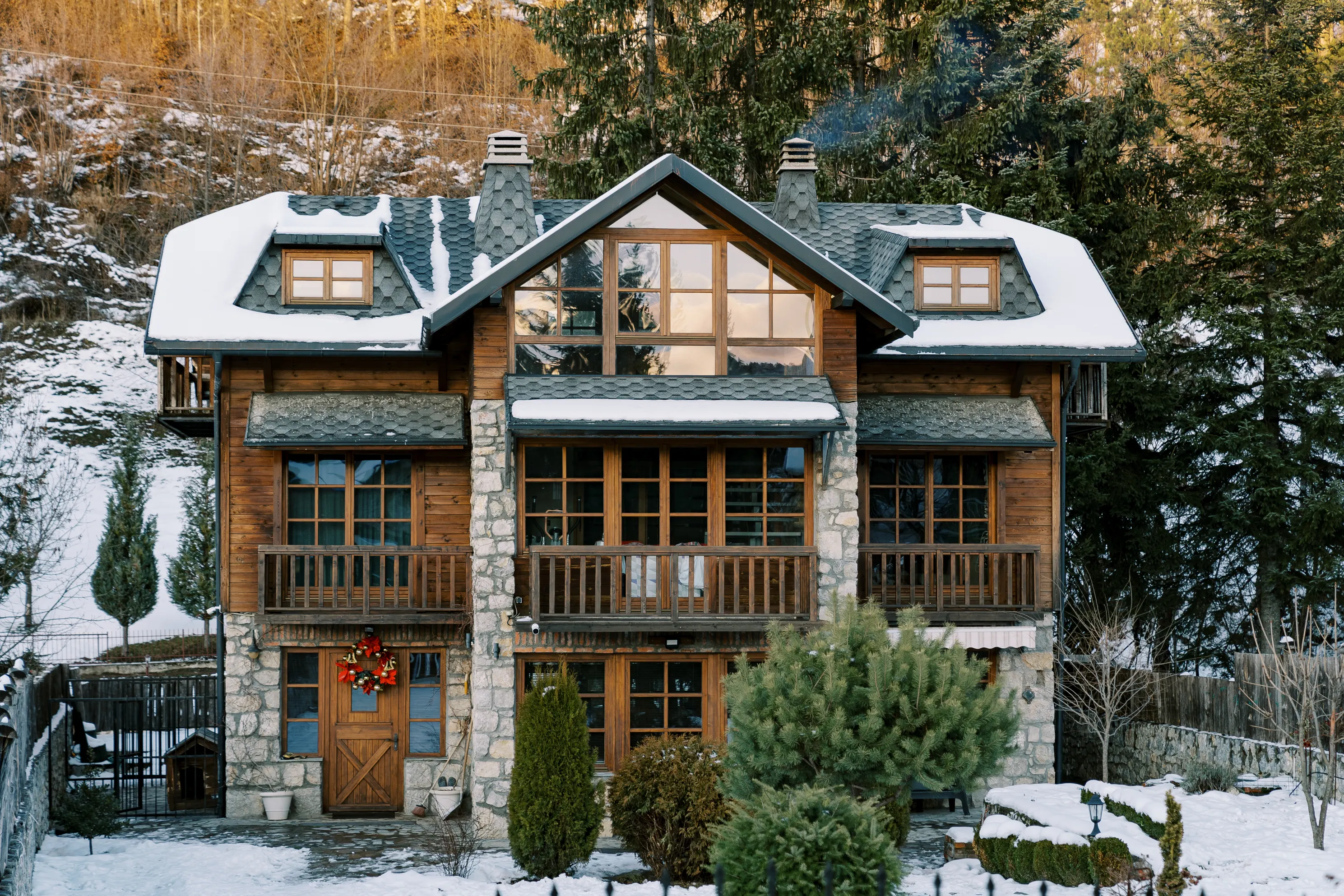
If your mountain home is showing ice dams, cracked stone, or a heated driveway that no longer melts snow, you are right to question whether this is really just normal wear from a hard Colorado winter. Understanding how altitude, snow loads, and compressed building seasons create failures you don’t see on the Front Range is the first step toward knowing whether you are looking at maintenance or a construction defect the builder still owes you for.
Why Do Mountain Homes Fail Differently? A Colorado High Country Construction Defect Guide
You bought or built in Beaver Creek, Vail, Avon, Edwards, or a nearby resort community. At closing, the home looked flawless.
Then the first hard winter arrived. Ice built up along the eaves. A water stain appeared on the ceiling of a guest bedroom. The heated driveway stopped melting snow in two large sections. Stone veneer near the entry began to spall.
These are not normal wear items. They are common signs of construction defects in high altitude builds.
Below, we explain why mountain homes fail differently than Front Range homes, which defects show up most often above 8,000 feet, and what Colorado law gives homeowners and HOAs to work with. Nelson Law Firm has resolved more than 1,000 construction defect cases and recovered over $500 million for homeowners and HOAs across five states.
Why Are High Country Homes Held to a Higher Standard?
Mountain construction is governed by stricter structural design criteria than valley or Front Range construction, and those criteria scale with elevation.
Colorado mountain county building departments publish altitude based roof snow load equations and minimum design criteria showing that design ground and roof snow loads increase sharply above roughly 8,000 to 10,000 feet. You can see this in Eagle County Community Development building requirements, Larimer County structural design information, and Colorado Division of Housing guidance for local building departments.
The practical point is simple. A roof assembly, framing plan, or drainage detail that is perfectly adequate in Denver or Fort Collins can be badly undersized in Beaver Creek.
When a builder imports a Front Range detail into a high country project, the failure is not bad luck. It is a design or workmanship problem.
Snow Load, Roof Structure, and Ice Damming
Two related failure categories dominate mountain roofs.
Structural. We regularly see undersized rafters or trusses, missing or improperly sized ridge and collar connections, inadequate load paths carrying weight down through the framing to the foundation, roof decking deflection, and unbalanced or drifted snow loads at valleys, dormers, and roof to wall intersections.
Sagging ridgelines, cracked drywall at ceiling to wall corners, and doors that stick only in winter can all signal a load path problem.
Envelope. Ice damming happens when heat escapes through an under insulated or poorly air sealed roof assembly, melts snow at the upper roof, and the meltwater refreezes at the cold eave. Water then backs up under the roofing and enters the assembly.
The root causes are almost always defect driven: insufficient insulation depth, blocked or absent ventilation baffles, missing or improperly lapped ice and water shield, unsealed can lights and bath fans venting into attics, and poor flashing at chimneys, crickets, and skylights.
Photograph ice buildup and interior staining with dates. Note whether the problem repeats in the same locations each winter. Repeat location is strong evidence of a defect rather than a weather event.
Freeze Thaw Damage on Stone, Stucco, and Decks
High country homes go through dramatically more freeze thaw cycles than Front Range homes. Intense solar gain at altitude warms and wets the cladding by day, then a hard overnight freeze expands whatever water got in.
The defects we see most often include:
- Stone veneer installed without a proper drainage plane, weep screed, or air gap, trapping water behind the stone
- Missing or undersized kickout flashing where roofs meet walls, sending water into the wall assembly instead of the gutter
- Stucco applied without correct lath, expansion joints, or a two layer weather resistive barrier, leading to cracking and delamination
- Deck ledgers flashed improperly or bolted through cladding, allowing water intrusion at a critical structural connection
- Grading and hardscape that slope water toward the foundation instead of away from it
- Sealants and mortar joints specified for milder climates that fail within a few seasons
Spalling stone and cracked stucco look cosmetic. They are usually the visible end of a hidden water intrusion path.
Behind the cladding, sheathing rot, mold, and framing damage may be already underway. Do not let a builder patch and paint over these conditions without an investigation.
Heated Driveways and Snowmelt System Failures
Snowmelt systems are a signature resort market feature and a signature resort market defect. They are expensive, buried, and difficult to repair after the fact.
Typical failure modes include:
- Tubing spaced too far apart, producing cold stripes where snow never melts
- Tubing installed at the wrong depth or damaged during the concrete pour
- An undersized boiler or heat exchanger that cannot keep up with actual design conditions
- Improper glycol concentration, no freeze protection, or no maintenance protocol handed to the owner
- Missing zone controls, sensors, or manifold labeling
- No insulation beneath the slab, sending heat down instead of up
- Slab cracking and heaving from inadequate subgrade preparation
The stakes are real. An owner may be paying enormous heating bills for a system that never worked as designed, and the repair often means removing and replacing the entire driveway.
Keep utility bills, service invoices, and any thermal or infrared images. Ask for the original design documents, submittals, and commissioning records. A system that was never commissioned or balanced is a strong indicator of a defective installation.
How Do Short Building Seasons and Altitude Create Defects?
High country projects have narrow windows for concrete, roofing, stucco, and paving. When schedules slip, work gets pushed into cold or wet weather and quality control gets skipped.
The consequences are predictable:
- Concrete placed in freezing conditions or cured improperly at altitude, where lower air pressure and low humidity change curing behavior and can reduce strength and increase cracking
- Stucco, mortar, sealants, and coatings applied outside manufacturer temperature ranges, voiding warranties and shortening service life
- Framing lumber and sheathing left exposed to snow and moisture before dry in
- Waterproofing and roofing rushed to beat weather, with inspections signed off out of sequence or skipped
- Trades stacked on top of each other, so envelope work is buried before anyone verifies it
Our Experience in Colorado's Resort Communities
We have successfully resolved more than 1,000 construction defect cases and recovered more than $500 million for homeowners and HOAs, with representation across five states.
Our approach is quality over volume. We take fewer cases and prepare each one as if it will be taken to trial, which matters in high value resort litigation, where builders and their insurers know which firms are actually prepared to go to trial.
Our Beaver Creek office serves Eagle County and surrounding mountain communities, and we work with structural engineers, building envelope consultants, and mechanical experts who understand high altitude construction.
What Should You Do Next?
- Document everything now with dated photos and video, including each winter's ice buildup and interior damage
- Save all bills, service records, warranty correspondence, and builder communications
- Request the original plans, specifications, submittals, and inspection records
- Do not sign a release or accept a cosmetic repair before an independent evaluation
- Talk to a construction defect attorney before your limitations or repose deadline passes
Call us if damage repeats seasonally, if a builder is dismissing your concerns as weather or maintenance, or if your HOA is facing envelope or snowmelt failures across multiple units.
If any of this sounds like your home or your association, contact us for a review of your situation.